
Test of the Giro Imperial II AS: The flagship of comfort and performance in forged carbon
10 juillet 2026 / Redac , Author


Choosing a pair of road cycling shoes is a crucial step in any cyclist's life, whether they are a fierce competitor or a long-distance sportive rider. As the main contact point and direct vector for power transfer to the pedals, the shoe must combine often contradictory requirements. On one hand, you need absolute stiffness to lose no watts during accelerations; on the other, supreme comfort is essential to endure long hours in the saddle without experiencing numbness or foot pain.
Giro, an iconic brand that equips much of the professional peloton, renews its elite offer with the Imperial II AS, a model that promises to push the standards of the premium category. To verify if the technological promises of the American brand translate into a real advantage on the road, our tester Paul put this pair under scrutiny for many weeks. From hilly training roads to long rides under changing weather, he delivers here his detailed and uncompromising analysis of this exceptional model.
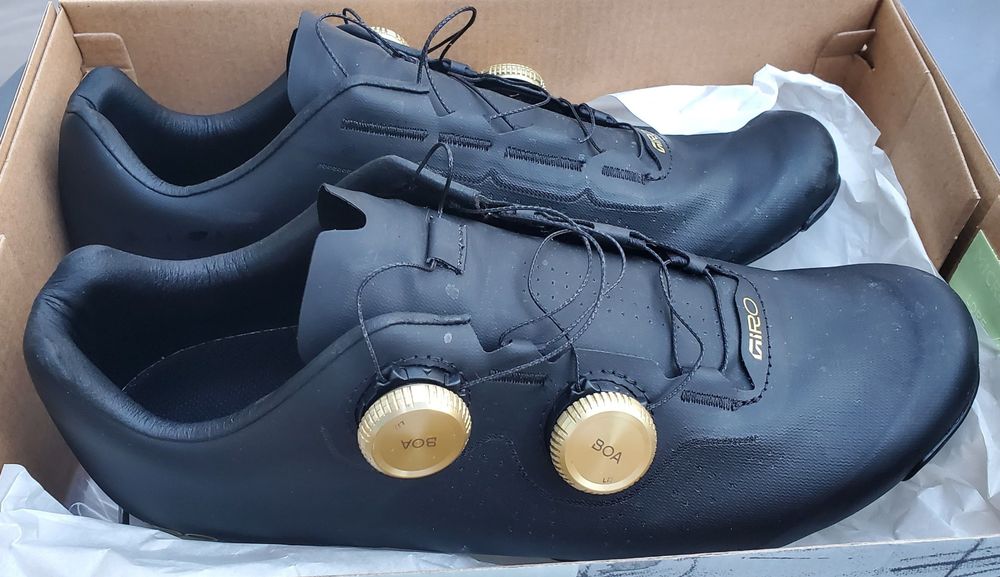
Technical sheet of the Giro Imperial II AS
Before you dive into my on-road impressions, here are the raw characteristics of this pair that immediately sets the tone.
| Characteristic | Technical detail |
|---|---|
| Type | Road |
| Closure system | Double Boa |
| Sole | Carbon |
| Cleat compatibility | SPD / Look Keo / Time |
| Weight (size 42) | 217 g |
Positioning and Technological Promises
With this Imperial II AS, we are firmly in the very high-end category, a shoe designed for real pro conditions applicable to the customer. Far from being a radical model reserved only for race days where comfort takes a back seat, it is the premium shoe that can be used every day. This is an essential point for me, as my time on the bike is shared between competition and training.
To justify its status and price, Giro did not skimp on research and development. From reading the product sheet, you notice the forged carbon plate for more rigidity, one-piece upper, adjustment system for the arch support. These are great promises on paper, but you had to see what it really felt like once slipped on and clipped into the pedals.
The Unboxing: Elegance in its Purest Form
You have to admit, the experience of buying a premium product also involves discovering it in its box. Upon opening, the visual shock is strong: these are magnificent road cycling shoes with flawless finishing. You can tell that the assembly was meticulous, with no signs of overflowing glue or careless stitching. Attention to detail extends to the accessories, as they come with a carrying bag, 2 additional inserts for adjusting the insole. This allows you to customize the arch support according to your foot’s morphology.
In terms of aesthetics, Giro has always known how to combine sobriety and class. I find these shoes superb. I tested the black model with elegant golden details for you. It’s a color combo that matches with almost any outfit, adding a nice touch of luxury that is much appreciated. For those who prefer lighter or more neutral tones, know that there are white and silver versions available.
Trying them on dry is always a moment of truth. Some stiff shoes feel like torture devices from the first seconds. Here, the fit is very welcoming, you immediately feel comfortable. Moving the foot around in all directions, I didn’t feel any annoying contact points. The upper’s opening is also well designed, which greatly facilitates getting ready: you put them on and take them off without difficulty.
Comfort and Fit: The Test of Hours in the Saddle
It’s obviously on the asphalt, after several hours of pedaling, that the true nature of a cycling shoe is revealed. On this dynamic aspect, my score is perfect (5/5). I didn’t suffer any hot spots, comfortable throughout the rides without adding a personal insole. The foot rests naturally, and the absence of friction points avoids the infamous "burning feet" syndrome well known by cyclists.
Support is another fundamental criterion. A slipping foot means lost energy and guaranteed injuries. Giro relies here on a double Boa tightening system that allows a perfectly adjusted fit. It’s well known in the field that Boa has proven itself for tightening cycling shoes. The tension is distributed evenly over the entire instep. However, with effort and the natural swelling of the foot, on a long ride you might need to tighten again. But the way the foot is wrapped remains exceptional because the one-piece upper manufacturing allows you to be well enveloped in the shoe. You really become one with the gear.
Regarding thermal management, this model is the all-season adapted version of the Imperial II; it is designed to be used in a temperature range between 5 and 20, so it is less ventilated and less breathable. I was therefore a little apprehensive using it under the sun. However, tested on a 5-hour ride at 20-25 degrees, I was not disturbed by the heat. That’s great news, especially since this more closed upper has a big advantage in mid-season: it blocks the wind well, allowing you to go without shoe covers fairly late in the season.
Rigidity and Transfer: The Magic of Forged Carbon
If comfort lets you ride long, rigidity lets you ride fast. And in this domain, the score is again maximum. The shoe’s main innovation is the forged carbon sole, a technology derived from motorsport. Instead of layering long carbon fibers in a classic way, this technique uses short fibers mixed with resin under high pressure. The result? It allows maximum rigidity but lets you play with thicknesses and shape for more comfort compared to a classic carbon sole.
On the road, it’s astonishing. During out-of-the-saddle climbs or sprints, the sole provides a very good power transfer sensation but without feeling like you have a plank under your foot as can sometimes be the case with very stiff soles. You feel a slight filtering that protects the joints without losing energy.
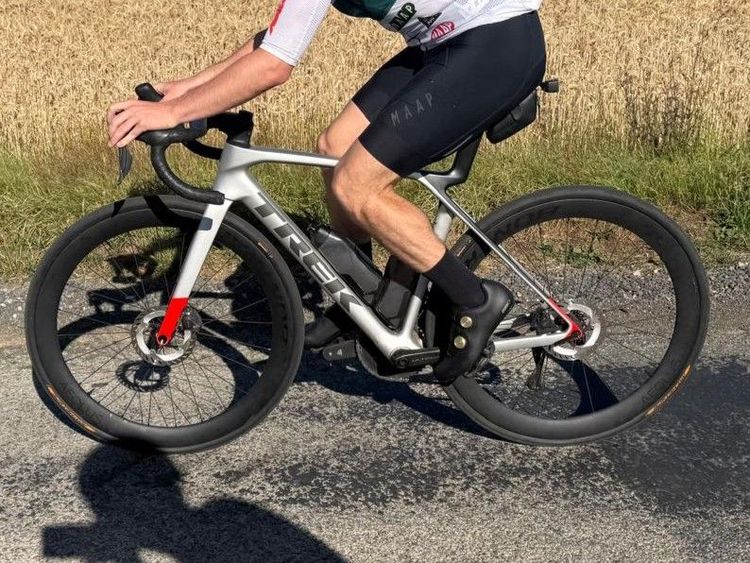
To optimize this test, they were used with Time XPRO 12 pedals. The pairing is surgical: I benefited from excellent power transmission, it really felt like all the effort went straight into the bike. This is a point not to neglect for your budget: such a pair of shoes should also be used with a high-end pair of pedals to fully enjoy them. It would be a shame to limit such potential with entry-level cleats or pedals.
On-road behavior: ride far, ride hard
As you accumulate rides, the character of this shoe becomes more refined. What stands out mainly is that you can chain kilometers without discomfort. This is a major asset for endurance events or long summer cyclosportives. Certainly, the forged carbon technology sacrifices a tiny bit of efficiency for a comfort far superior to a pure racing shoe, notably by better absorbing vibrations. But on efforts over three hours, this slight compromise turns into an advantage, because a cyclist who doesn’t have foot pain will always finish stronger than a cyclist crippled by pain in an ultra-stiff shoe.
Durability and maintenance: ready to face the seasons
An investment at this level must be designed over several years. Regarding wear resistance, this is not a long enough test to make a definitive judgment. However, it seems quite robust. The materials exude quality and reinforcements in strategic places are reassuring.
Maintenance is often the black spot of light-colored or very well-ventilated shoes. Here, the material cleans easily, plus black is less staining. A simple wipe with a damp sponge after the ride is enough to restore their shine.
Finally, unstable weather is not a major problem. Riding in grey skies, I noticed they withstand splashes and even autumn drizzle well. That’s the whole point of this "All Season" version. However, you have to be realistic about their capabilities: they are not waterproof, they are not winter shoes. If a downpour is forecast, adding waterproof overshoes will still be mandatory.
The final verdict
| Advantages | Disadvantages |
|---|---|
| One of the best shoes on the market, adopted by pros for its comfort and efficiency. | May feel hot above 25°C (to consider in heatwave regions). |
| Very wide usage range: usable most of the year, or even year-round depending on your region. | Its very high-end positioning implies a high price that represents a real budget. |
Recommended profile: I warmly recommend this pair for a cyclist ranging from competitor to experienced rouleur. If you’re looking for a masterful compromise between optimal power transmission and a comfort that will allow you to double your miles on weekends, the Giro Imperial II AS is a top-tier candidate.

Redac
Author
The Alltricks editorial team: passionate experts sharing blog tests and advice on running (10k to marathon), trail, outdoor activities, and of course, all types of cycling.
View his articles


