
How to choose your running shoes
A run can turn into an ordeal if your shoes suit neither your practice nor your body. New shoes come out every year, letting you perform better while keeping your stride comfortable and your runs enjoyable.

Finding the right running shoes is the first step towards enjoyable runs and a lower risk of injury. Whether you are a beginner covering your first kilometres or an experienced marathoner chasing new records, every detail counts when you fine-tune your kit.
Start with one fact: while you run, your foot widens by 3 to 7 mm and lengthens by 5 mm. So it pays to follow a few pieces of advice before you choose. Kilometre after kilometre, the arch drops slightly under fatigue and heat, which calls for extra room inside the shoe to prevent rubbing and blisters.
Match your practice and your mileage
Before you even look at the technical specs, work out how often you run. An occasional runner wants comfort and cushioning above all, to protect the joints. A regular runner rotates several pairs and looks for responsiveness instead.
- 1 Road running (and paths) calls for maximum cushioning, stability, comfort and support.
- 2 Trail and ultra trail demand grip, cushioning and durability. Lugs and toe bumpers become essential.
- 3 Fitness needs flexibility, support and cushioning to handle lateral movement.
Every discipline comes with its own demands, so pick a pair of running shoes that matches yours.
Match the terrain you run on
The surface you run on most often dictates the outsole (grip), the cushioning and the structure of the upper. Here is our selection by discipline:
| Terrain | Shoe features & requirements | For men | For women |
|---|---|---|---|
| Road | Maximum cushioning to absorb impact on tarmac, plus stability, low weight and energy return to eat up the kilometres. | Men's running shoes | Women's running shoes |
| Mixed / Gravel | Total versatility: a lightly lugged outsole for grip on gravel paths, paired with comfortable cushioning for the tarmac sections. | Men's gravel running shoes | Women's gravel running shoes |
| Trail / Ultra trail | Aggressive lugs for faultless traction in mud and over rock, reinforced toe bumpers to protect the toes, and firm ankle support. | Men's trail shoes | Women's trail shoes |
| Track / Athletics | Spikes, extreme responsiveness, minimal weight and no surplus cushioning, so every bit of energy transfers to the track. | Men's track shoes | Women's track shoes |
Match your profile and your gait
Your weight matters too, because the materials used do not all have the same density and cannot deliver the same cushioning across every body type.
- For men under 75 kg, choose shoes built for "light" body types; between 75 and 85 kg, shoes built for "medium" body types; above 85 kg, shoes built for "heavy" body types.
- For women, the scale shifts: up to 65 kg, choose shoes built for light body types; between 65 and 75 kg, shoes for medium body types; above 75 kg, shoes for heavier body types.
Every runner has a gait type: neutral, pronator or supinator. A shoe suited to your body gives you stability and better balance. To work out which you are, look at the wear pattern on your old shoes:
- • Neutral (universal): the wear sits in the middle of the forefoot (50% of runners).
- • Pronator: the wear sits on the inner edge of the forefoot. The foot tends to roll inwards (45% of runners).
- • Supinator: the wear sits on the outer edge of the forefoot (under 5% of runners).
Why drop matters
Drop is the height difference (in millimetres) between the heel and the forefoot of the shoe. It changes the biomechanics of your stride and the way your muscles work.
- Classic drop (10 to 12 mm): the cushioning sits at the back. This is the historic standard, ideal for beginners, heel strikers, or anyone with sore calves or Achilles tendons.
- Low to mid drop (4 to 8 mm): the modern compromise. It gently moves your impact zone towards the midfoot, for a more dynamic stride that puts less strain on the knees.
- Zero drop (0 mm): the foot sits completely flat, mimicking barefoot running. Reserved for experienced runners, it asks a lot of the calves. Careful: move to a lower drop very gradually to avoid injury.
Midsole technologies
The midsole sets the durability of the shoe and also its character: bounce, comfort, speed.
- Oversize (maximalist): a very strong trend right now. These thick midsoles (a big stack height) deliver XXL cushioning that soaks up impact beautifully. Ideal for long runs and for saving your legs.
- Carbon plate: embedded in the midsole, it acts like a spring. It brings exceptional stiffness and energy return, designed specifically to break your personal bests on the road.
- Standard (EVA / TPU foam): versatile, it strikes an excellent balance between shock absorption, low weight and energy return for most everyday training.
- Minimalist: extremely thin and flexible (the barefoot concept), it lets the foot drive the movement and demands excellent running form.
A few final tips on sizing
People forget this one all the time: you do not size running shoes the way you size everyday shoes.
- The golden rule: always leave a 1 cm margin (roughly half a size to a full size up) between your longest toe and the end of the shoe.
- The right moment: always try shoes on at the end of the day, when your feet have swollen, just as they do during exercise.
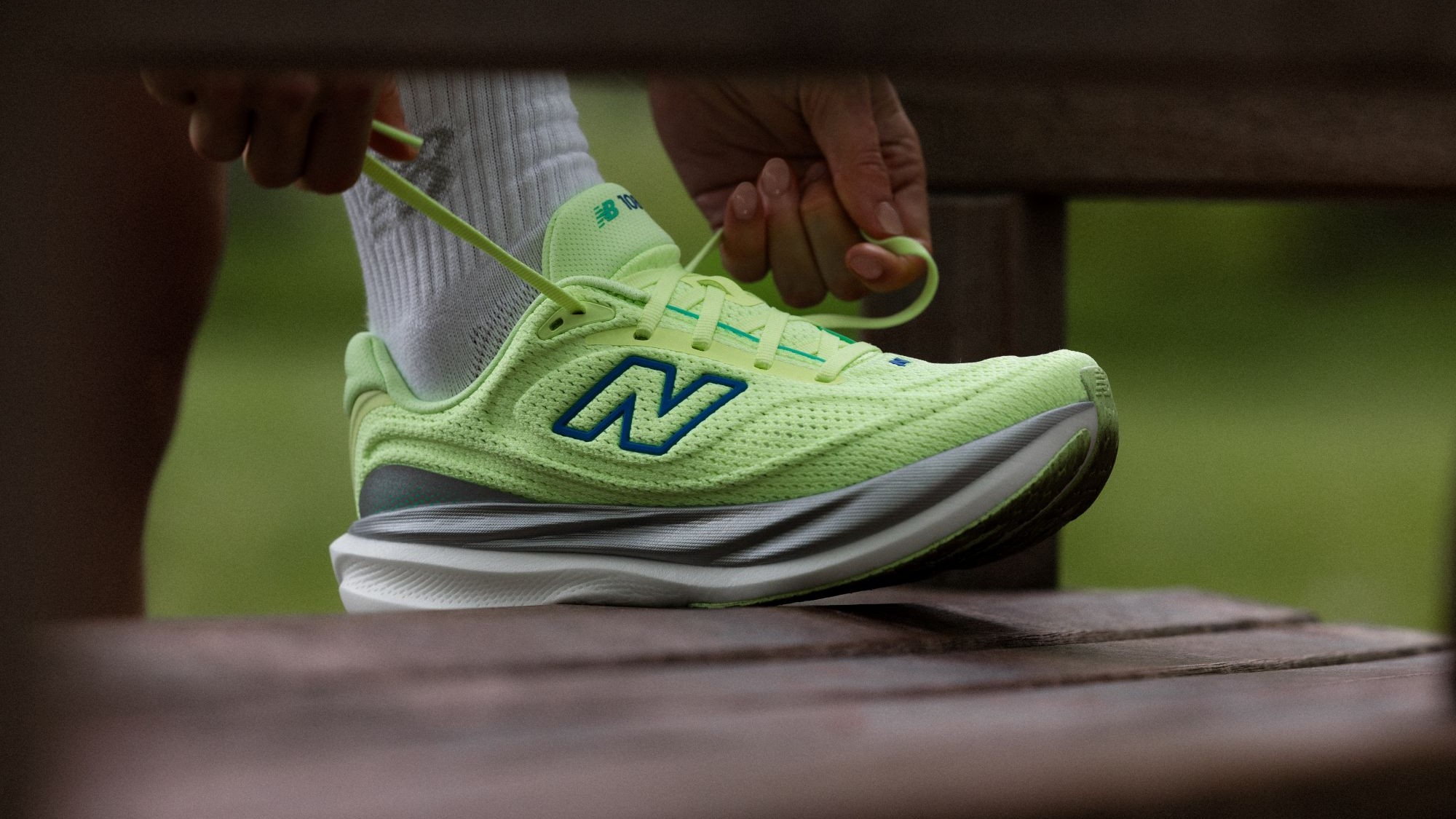
- The lacing: your heel should not slip, and the instep should be held firmly without being squeezed.
We will contact you by e-mail when this item is back in stock.


