
How to choose your bike lights?
Bike lights can be extremely useful when riding at dusk or at dawn, especially in autumn and winter when the days are shorter. Darkness falls quickly in wooded areas, and mountain bikers should always keep an eye on the time during their rides, as it is not uncommon to finish a ride in the dark in the middle of winter. For road cyclists, lights also help make them more visible to motorists, alongside a high-visibility vest.
Prices for different types of bike lights vary considerably, ranging from just a few euros to several hundred. Here is some useful information to help you choose the right lighting for your needs.
In a nutshell: key points for choosing the right bike lights
- Identify your main need: do you want to be seen (commuting and well-lit urban areas: 25 to 200 lumens) or see the road and obstacles in complete darkness (unlit roads, Gravel and MTB: 400 to over 2,000 lumens)?
- Choose the right battery life: opt for a USB-C rechargeable battery (or one powered by your e-bike battery) with enough reserve to last longer than your usual rides.
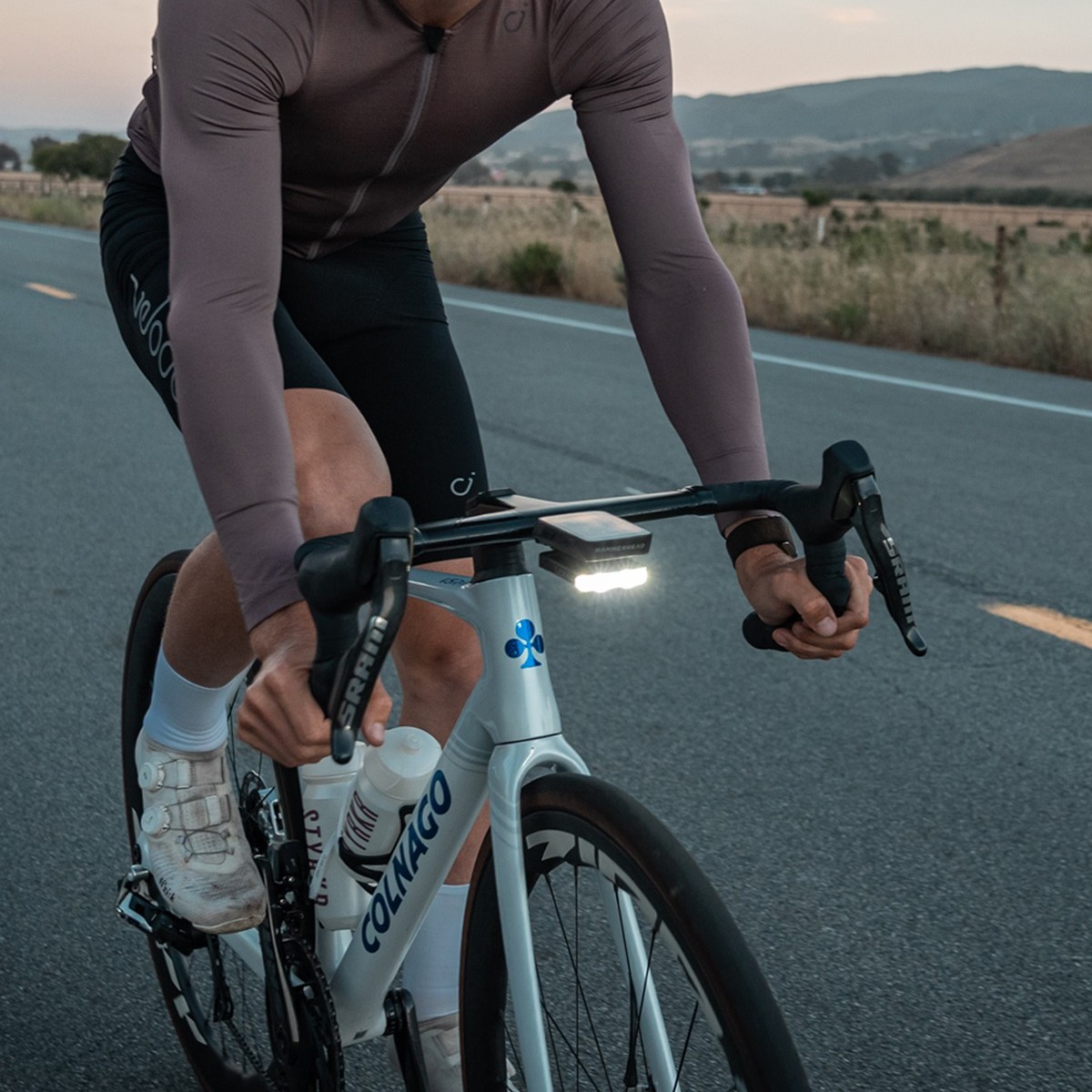
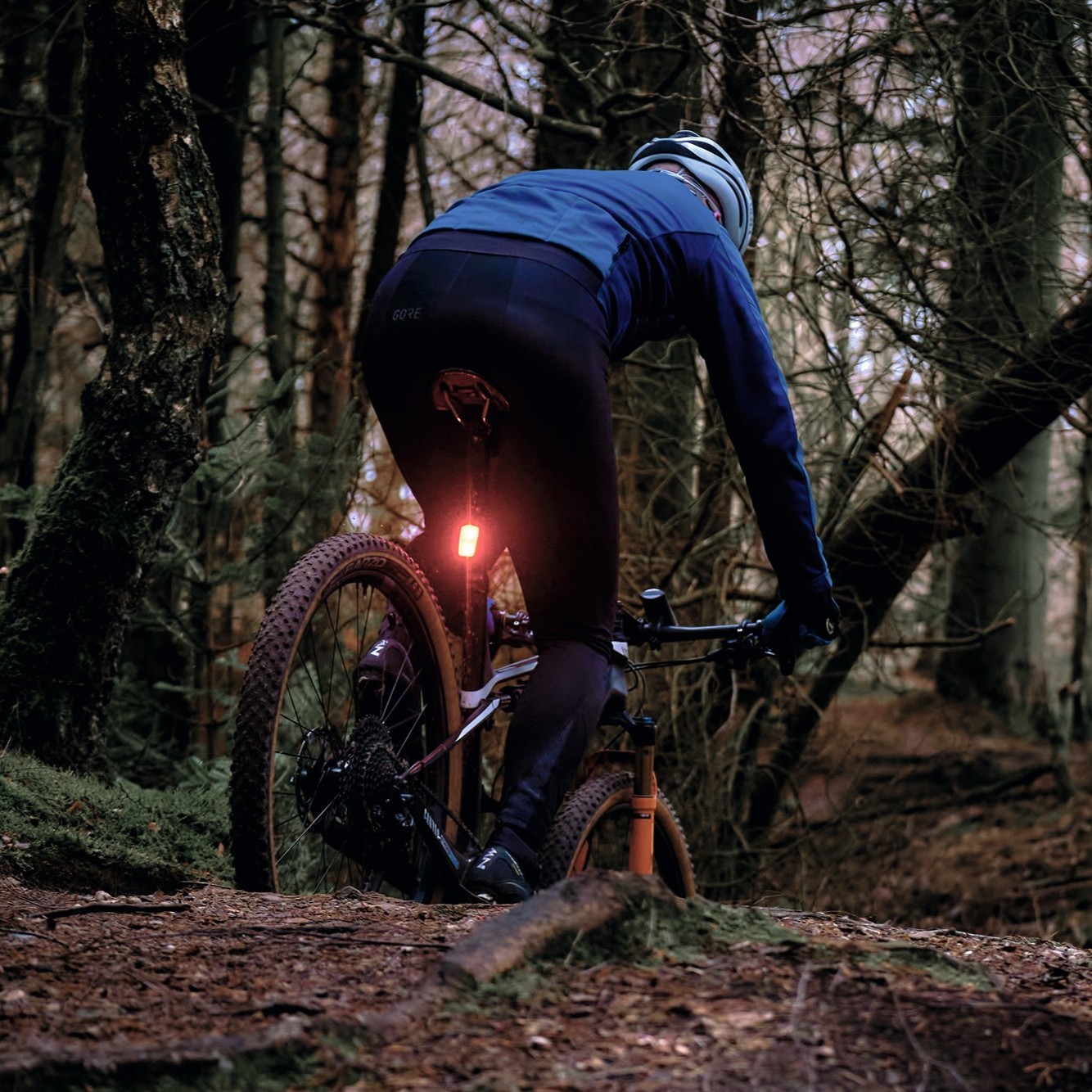
- Choose the right mounting position: fit your main light to the handlebars to illuminate the ground, use a helmet-mounted light for MTB to illuminate wherever you look, and attach a red rear light to the seatpost.
- Check waterproofing and compliance: choose at least an IPX4 rating for rain protection and make sure you use a fixed, non-dazzling light that complies with road traffic regulations.
Technical criteria: brightness and battery life
Brightness
The first important criterion to consider is the brightness of the light. It is measured in lumens.
The most powerful lights produce between 1,500 and 2,000 lumens, while entry-level models produce around 25 lumens. You should also check whether the stated lumen figure refers to measured output, as this is always lower than the light source's theoretical output (some light loss is normal). If this is not specified, the figure generally refers to the number of lumens emitted by the light.
Lumens or Lux: what's the difference? Lumens measure the total amount of light emitted in all directions, while lux measures the actual light intensity projected onto a specific surface (1 lux = 1 lumen/m²). A light with an excellent optical lens will focus its beam more effectively on the road and deliver more lux, even with a moderate lumen output.
The battery
The second factor to consider is the battery.
The battery determines how long your light will last while in use. Entry-level models run on disposable batteries, while most other lighting systems use rechargeable batteries, either built into the light housing or external (allowing you to carry larger batteries).
The battery life of the most powerful lights varies depending on the selected lighting mode (high, normal, eco or flash), ranging from a few hours (2–3 hours) to several dozen hours, depending on the model.
In addition to disposable batteries and USB/USB-C rechargeable batteries, there are also lights powered by a hub dynamo (ideal for bikepacking and long-distance touring), as well as lights specifically designed for electric bikes (e-bikes), which connect directly to the motor battery (Bosch, Shimano, Yamaha, etc.). Finally, remember that cold winter temperatures can reduce the battery life of Lithium-ion batteries by 20 to 30%.
What brightness should you choose for your type of riding?
| Type of riding | Purpose | Front light output | Rear light output | Beam type |
|---|---|---|---|---|
| Well-lit city / Commuting | Be visible to other road users | 25 to 200 lumens | 10 to 50 lumens | 180° side visibility |
| Unlit roads and tracks | See further ahead at higher speeds | 400 to 800 lumens | 30 to 100 lumens | Long-range, glare-free beam |
| Gravel and trails | Read uneven terrain | 800 to 1,200 lumens | 50 to 150 lumens | Combined wide and deep beam |
| Night MTB (woodland trails) | Anticipate every obstacle | 1,200 to 2,000+ lumens | 20 to 50 lumens | Extra-wide beam + helmet-mounted light |
Light direction (front or rear)
A rear light differs from a front light because they serve different purposes. The rear light is designed to make you more visible to road users approaching from behind, while the front light has two functions: it illuminates your route and makes oncoming motorists aware of your presence. Red LEDs are therefore used for rear lights and white LEDs for front lights.
Beam shape: On roads and in urban areas, choose a directional beam (often certified to the German StVZO standard) that cuts off the light at the top, like a car headlight, to avoid dazzling oncoming road users. For MTB, choose a wide-angle, round and diffused beam that illuminates both the ground and branches above you.
Where to mount your bike lights
There are several options for mounting your lights. Your bike is generally used as the mounting platform (handlebars for the front light and seatpost for the rear light), but you can also attach lights to your helmet. Make sure the mounting system you need is included with the product you purchase.
Types of mounts: Flexible silicone straps can be fitted without tools to all handlebar shapes (including flat aero handlebars) and dropper seatposts. For heavier lights or rough terrain, a rigid screw-mounted bracket or an out-front mount beneath your GPS bike computer (GoPro-style standard) provides a secure hold. For night-time MTB, the ideal setup combines a handlebar-mounted light (to highlight the contours of the terrain) with a second light on your helmet (to illuminate the inside of corners wherever you look).
Other criteria to consider
You can choose waterproof lights that allow you to ride in heavy rain without worrying about damaging your equipment.
There are also other features to consider before buying your lights, such as an LED battery-level indicator or a choice of different lighting modes.
Understanding waterproof ratings (IPX standard)
- IPX4: Protection against splashes and moderate showers from all directions (the recommended minimum standard).
- IPX5 / IPX6: Protection against powerful water jets and torrential rain.
- IPX7 / IP67: Full protection against dust and mud, as well as temporary immersion (recommended for MTB and winter Gravel riding).
Smart technologies: brake lights and rear radars
Modern bike lights now include connected features designed to improve your safety:
- Brake light function: Equipped with an accelerometer, some rear lights detect when you slow down and instantly increase their brightness to warn vehicles behind you.
- Ambient light sensor: The light automatically adjusts its brightness (day/night mode) when you enter a tunnel or the sun sets, helping to optimise battery life.
- Rear radars (such as Garmin Varia, Bryton Gardia and Trek CarBack): These rear lights detect approaching vehicles up to 140 metres behind you, adjust their light signal and send real-time alerts to your GPS bike computer or smartphone.
Find the right bike lights for your needs
Front Lights
From compact urban lights to ultra-powerful headlights for MTB and road cycling.
Rear Lights
Steady red lights, smart brake lights and rear radars for safer riding.
Front + Rear Light Sets
A complete and cost-effective solution for equipping your bike in one purchase.
High Visibility
Reflective vests, armbands, backpack covers and accessories to help you stay visible from every angle.
Frequently asked questions about bike lights
How many lumens do you need for night-time cycling?
In well-lit urban areas, 25 to 200 lumens are enough to make you visible. On unlit roads, aim for 400 to 800 lumens to see the road clearly at higher speeds. For MTB or Gravel riding in the woods, choose at least 1,000 to 2,000 lumens to anticipate every root and obstacle.
What is the difference between Lumens and Lux?
Lumens measure the total luminous flux emitted by the LED in all directions, while lux measures the actual illuminance projected onto a specific surface (1 lux = 1 lumen per m²). A light with good optics can deliver a high lux level even with a moderate lumen output.
Which waterproof rating should you choose for riding in the rain?
Choose at least an IPX4 rating to withstand water splashes and regular showers. For winter rides in heavy rain or muddy MTB trails, opt for an IPX6 or IPX7 rating.
We will contact you by e-mail when this item is back in stock.


